
compare corbett and ranthambore for a 5 day wildlife photography trip in november on a 50k budget
9 mins read

compare corbett and ranthambore for a 5 day wildlife photography trip in november on a 50k budget

Planning a wildlife photography trip in India usually comes down to one difficult choice: Jim Corbett National Park or Ranthambore National Park. Both are legendary tiger reserves. Both offer dramatic landscapes, rich biodiversity, and thrilling safari experiences. But for a photographer traveling with a budget of around ₹50,000 for five days in November, the experience can feel very different depending on which park you choose.

November is also one of the best months for wildlife travel in India. The monsoon has ended, forests look fresh, animals are active, and visibility improves as the grass begins to dry. Weather stays pleasant throughout the day, making long safari hours comfortable for both photography and travel.

The real question is not which park is “better” overall. The better question is:

Which destination gives you the best wildlife photography experience for your style, expectations, and budget?

This detailed comparison breaks down everything that matters — tiger sightings, landscapes, photography opportunities, safari costs, accommodation, crowd levels, birdlife, accessibility, and overall value for money.

Understanding the Personality of Both Parks

Before comparing details, it helps to understand the character of each reserve.

Jim Corbett National Park: Wild, Dense, and Unpredictable

Corbett, located in Uttarakhand, is India’s oldest national park. It feels vast, raw, and genuinely wild. The landscape includes dense sal forests, riverbeds, grasslands, hills, and streams. Unlike many parks where tiger sightings dominate the tourism narrative, Corbett offers a complete wilderness experience.

Photography here is more challenging because visibility is lower in dense forest areas. But when opportunities appear, they are often dramatic and natural.

Corbett feels less like a zoo and more like entering a living ecosystem.

Ranthambore National Park: Open, Cinematic, and Tiger-Focused

Ranthambore in Rajasthan is probably India’s most famous tiger reserve for photographers. The terrain is dry and open with ancient ruins, lakes, rocky hills, and sparse forest cover. Visibility is much higher compared to Corbett.

This makes Ranthambore ideal for photographers hoping to capture clear tiger images.

The park has a cinematic quality. Tigers walking near fort ruins or across lakes create iconic wildlife frames that are difficult to replicate elsewhere.

For first-time wildlife photographers, Ranthambore is often easier and more rewarding.

November Weather Conditions

Corbett in November

  • Morning temperatures: 8–12°C
  • Day temperatures: 20–25°C
  • Misty mornings are common
  • Green landscapes remain after monsoon

The soft winter light in Corbett is beautiful for photography. Early mornings can produce atmospheric images with fog, golden light, and backlit grasslands.

However, dense vegetation may still reduce visibility in some zones during early November.

Ranthambore in November

  • Morning temperatures: 10–15°C
  • Day temperatures: 25–30°C
  • Dry conditions improve visibility
  • Warm golden light dominates landscapes

November in Ranthambore is excellent for photography because the harsh summer heat has not yet arrived, but the forest has already started opening up.

The dry terrain also means cleaner backgrounds and better animal visibility.

Tiger Sightings: Which Park Gives Better Chances?

This is the biggest deciding factor for many travelers.

Ranthambore Has Better Tiger Visibility

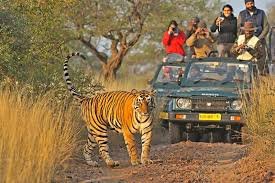
If your main goal is tiger photography, Ranthambore generally offers better opportunities.

Why?

  • More open landscapes
  • Tigers often walk on tracks and open areas
  • Easier line of sight for photographers
  • Tigers are relatively habituated to vehicles

In zones like 2, 3, 4, and 6, photographers frequently get prolonged sightings if lucky.

The park’s lakes and ruins also help create aesthetically strong compositions.

Corbett Has More Tigers, But Harder Photography

Interestingly, Corbett has one of the highest tiger densities in India. But dense forest cover makes sightings more difficult.

A tiger may be only 20 meters away and still invisible.

Photography in Corbett depends heavily on:

  • Experienced guides
  • Tracking alarm calls
  • Luck
  • Patience

When sightings happen, they feel truly wild and exciting, but they may be shorter and harder to frame properly.

Best Photography Experience Overall

Choose Ranthambore If You Want:

  • Better tiger portraits
  • Easier wildlife visibility
  • Cleaner compositions
  • More consistent safari outcomes
  • Dramatic landscapes with ruins and lakes

Choose Corbett If You Want:

  • A complete wilderness experience
  • Forest storytelling photography
  • Bird photography
  • Landscape diversity
  • More natural and less tourism-driven safari moments

Safari Costs and Budget Breakdown

With a ₹50,000 budget for five days, cost management becomes important.

Approximate Budget for Corbett (5 Days)

Expense Estimated Cost
Stay (4 nights mid-range resort) ₹12,000–18,000
Safaris (4–5 jeep safaris) ₹12,000–18,000
Food ₹4,000–6,000
Travel from Delhi ₹3,000–6,000
Miscellaneous ₹3,000
Total ₹35,000–50,000

Corbett can fit comfortably within ₹50,000 if planned smartly.

Approximate Budget for Ranthambore (5 Days)

Expense Estimated Cost
Stay (4 nights hotel/resort) ₹10,000–16,000
Safaris (4–5 canter/gypsy safaris) ₹15,000–22,000
Food ₹4,000–6,000
Travel from Delhi/Jaipur ₹4,000–7,000
Miscellaneous ₹3,000
Total ₹40,000–54,000

Ranthambore tends to become slightly more expensive, especially if you choose gypsy safaris and prime zones.

Which Park Gives Better Value for Money?

Corbett Offers Better Overall Wilderness Value

You get:

  • Better forest diversity
  • More species variety
  • Better birding
  • More scenic landscapes
  • Richer ecosystem experience

If you care about wildlife beyond tigers, Corbett gives stronger value.

Ranthambore Gives Better Tiger Photography Value

If your goal is specifically:

  • Tiger shots
  • Portfolio images
  • Wildlife Instagram content
  • Big cat encounters

Then Ranthambore gives better returns for the money spent.

Bird Photography Comparison

Corbett Is Far Superior for Birding

Corbett is one of India’s best bird photography destinations.

You can photograph:

  • Crested serpent eagles
  • Kingfishers
  • Hornbills
  • Owls
  • Woodpeckers
  • River lapwings
  • Fishing eagles

November is excellent because migratory birds start arriving.

For photographers carrying long lenses, Corbett is incredibly rewarding.

Ranthambore Birding Is Good but Secondary

Ranthambore has:

  • Peacocks
  • Owls
  • Painted storks
  • Kingfishers
  • Eagles
  • Water birds near lakes

But the park is mostly tiger-focused.

Bird photographers usually prefer Corbett.

Landscape Photography Opportunities

Corbett Landscapes

Corbett offers:

  • Rivers
  • Forest roads
  • Misty mornings
  • Grasslands
  • Himalayan foothill atmosphere

Landscape photography feels immersive and layered.

Ranthambore Landscapes

Ranthambore offers:

  • Ancient fort ruins
  • Dry deciduous forest
  • Lakes with reflections
  • Rocky cliffs
  • Dramatic sunset tones

Images often appear more cinematic and visually striking.

Crowd Levels and Safari Pressure

Ranthambore Gets More Tourist Pressure

Popular zones can become crowded, especially during weekends and holidays.

At tiger sightings:

  • Multiple vehicles may gather
  • Positioning becomes competitive
  • Noise levels increase

This can affect photography quality.

Corbett Feels More Spread Out

Corbett’s larger area creates a less crowded atmosphere in many zones.

The experience feels calmer and more immersive.

However, some popular zones like Dhikala still attract heavy demand.

Accommodation Options

Corbett Stay Experience

Corbett has:

  • Riverside resorts
  • Forest lodges
  • Nature camps
  • Mid-range photography-friendly stays

Many properties offer peaceful forest environments ideal for photographers.

Ranthambore Stay Experience

Ranthambore has:

  • Heritage resorts
  • Luxury camps
  • Budget hotels
  • Photography-focused safari lodges

Accommodation is generally concentrated near the park gate area.

Accessibility and Travel Convenience

Reaching Corbett

Best route:

  • Delhi to Ramnagar by train or road

Travel time:

  • 6–7 hours approximately

Road conditions are decent.

Reaching Ranthambore

Best route:

  • Delhi to Sawai Madhopur by train

Travel time:

  • 7–9 hours

Connectivity is very convenient because many trains stop at Sawai Madhopur.

Best Safari Strategy on a ₹50K Budget

Ideal Corbett Plan

  • 4 nights stay
  • 4 jeep safaris
  • Mid-range jungle resort
  • Shared transport
  • Focus on Dhikala + Bijrani zones

This gives balanced wildlife exposure without overspending.

Ideal Ranthambore Plan

  • 4 nights stay
  • 5 safaris
  • Mix of gypsy and canter safaris
  • Budget-friendly hotel
  • Try for Zones 2–5

Prioritize safari count over luxury accommodation.

For wildlife photography, safari frequency matters more than expensive resorts.

Camera Gear Recommendations

For both parks:

Essential Lenses

  • 200–500mm or 150–600mm telephoto
  • 70–200mm for environmental shots
  • Wide-angle for landscapes

Useful Accessories

  • Bean bag
  • Extra batteries
  • Dust cover
  • Warm layers for morning safaris

In Ranthambore, longer lenses help isolate subjects in open terrain.

In Corbett, flexible zoom ranges are useful because subjects can appear suddenly at varying distances.

Which Destination Is Better for Beginners?

Ranthambore Is Easier for First-Time Wildlife Photographers

Reasons:

  • Better visibility
  • More predictable sightings
  • Simpler compositions
  • Less frustrating tracking conditions

You are more likely to return with satisfying images.

Which Destination Is Better for Experienced Photographers?

Corbett Offers Greater Depth and Challenge

Experienced photographers often appreciate:

  • Complex forest light
  • Atmospheric scenes
  • Behavioral moments
  • Diverse species

Corbett rewards patience and fieldcraft.

Final Verdict: Which Should You Choose?

Choose Ranthambore If:

  • Tiger photography is your top priority
  • You want stronger sighting probability
  • You are a beginner wildlife photographer
  • You prefer open landscapes
  • You want dramatic tiger images

Best for:

Tiger-focused photography trips.

Choose Corbett If:

  • You enjoy complete wildlife ecosystems
  • Bird photography matters to you
  • You prefer immersive jungle experiences
  • You enjoy forest landscapes
  • You want diversity beyond big cats

Best for:

Nature and wildlife storytelling photography.

The Best Overall Choice on a ₹50K Budget

For most photographers traveling in November with a ₹50,000 budget:

Ranthambore is the better choice for dedicated tiger photography.

You are more likely to get clear sightings, stronger compositions, and portfolio-worthy tiger images within a limited trip duration.

However:

Corbett is the more rewarding choice for photographers who value the entire wilderness experience rather than just tiger encounters.

In the end, the right choice depends on whether your camera is chasing a tiger portrait or a richer story of the jungle itself.

Leave a Reply

Your email address will not be published. Required fields are marked *